What can be done when a pet goes missing
A sad story with a happy ending
"I knew straight away that something wasn't right. Mr Walt had never not turned up for his breakfast before and I instantly panicked"
 Losing our minds is often the first reaction when something bad happens, and it is hard to think what to do. Because of that we decided to give some advice to help people that may be going through this.
1 - BE CALM AND DOUBLE CHECK Check usual spots and possible hiding places slowly, call your pet's name and listen if there is a response, making some noise with their food bags also helps.
2 - ACT FAST
Distressing as it was, Amy did not waste any time, she calmed herself and started work to find and bring Mr. Walt home:
NOTIFY YOUR MICROCHIP COMPANY If your pet has a microchip (dogs in the UK must have one)
"Walt had been microchipped years ago but I'd bought a new mobile phone since then and my phone number had changed. A quick call to the microchip company was all it took to update my details and report him as missing"
3 - GET THE WORD OUT
Quick action increases your chances.

make sure you put posters where people will see them
Make as much "noise" as you can - this is especially important if you think your pet has been stolen, the idea is to make them too hot to handle. This will include:
-
- Facebook posts (join groups for missing pets, vets practices, walking or dog walking groups in your area) pet lovers are very good at sharing posts of a missing pet the more eyes you have out there, increases the chances of finding your pet.
"Facebook and Nextdoor.co.uk were key to Walt's return. Within 24 hours, his missing poster had been seen by thousands of people and it really helped to get the word out around the local and wider community"
-
- Geographically relevant WhatsApps groups (be mindful about your area but cats have been known to ‘jump into a van’ and be taken far away);
- Vets clinics, Pet shops,
- If you believe your pet has been stolen - the police,
- Get flyers onto notice boards, and talk to the people in the area (make sure that they can find your phone number on those boards).
- Internet web pages focused on finding pets (as Nextdoor.co.uk).

notice boards are great for people to find you
4 - PLAN AN ORGANISED SEARCH When going out looking for your pet, make sure to share the information with people you find along the way. If you have an organised search, your friend will know where you already looked and they can check places you haven’t seen yet.

Amy's search coverage area
"I used Google maps to view a map of my village from above. It was useful to see where I'd searched (and where I hadn't!)"
- Make sure to ask neighbours to check their houses, gardens, sheds etc. (this tip is useful specially for cat owners).
- Remember to listen when shouting for your pet.
- Spread some personal belongings around your garden. It might help them find their way home by following the scent of home.
5 - ACCEPT PEOPLE’S HELP
"I learnt to accept people's help during this time. My friends, neighbours and even complete strangers wanted to help me search and I quickly realised I couldn't do it alone. Although I felt awkward at first, I soon realised Mr Walt was a very popular cat and lots of people loved him and wanted him home - not just me!"
The pet community is very supportive and empathic, and most people will, at the very least, keep an eye out for your pet. This helps to spread your reach.
Preparing for worse (whilst hoping for the best) There is a big load of stress and fear that hover over people that are looking for missing pets, as time goes by. Fatigue and tiredness will affect you and push you down. The chances of your pet coming back home decrease as time advances, and you have to be prepared to accept that they might never come back. That is especially difficult for families as letting a pet go without being certain of their death might feel like they are being abandoned which generates guilt, at the same time, hard feelings, like grief, may also be felt as you are missing having your pet at home, after all, grief is also about loss, not only death. It is important to remember that letting go does not mean abandoning, and one can only do as much as they reasonably can. Feeling bad is the price we pay for the love shared with our furry companions. Nevertheless, Amy’s story has a happy ending. After almost a whole month since Mr. Walt's disappearance, one of Amy’s facebook friends screenshotted a post they saw on a pet finding website from a lady that had been feeding a ginger cat that recently appeared in her garage. Amy called her right away “That is my cat!”.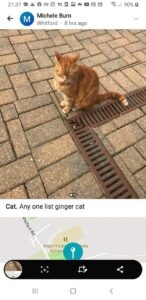
Mr. Walt being found


